Susan Hannah on Book Design ─ October Meeting Report

2016-10-12-19-06-36

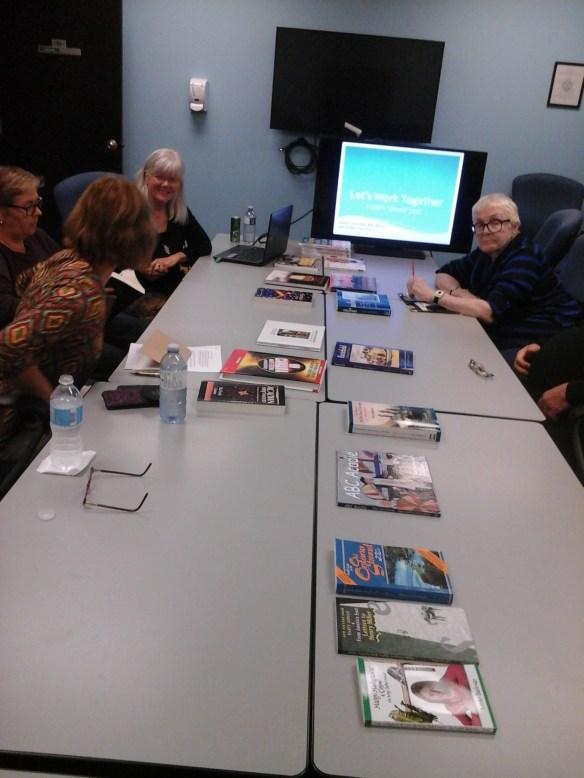
Carla Douglas (left) and Lee d’Anjou (right) listen as Susan Hannah talks book design at the Editors Kingston October gathering.

Association News

Some updates from the national organization:

Editors Canada has a new executive director,  John Yip-Chuck ─ and he’s an editor! At least, he was one, at legal publisher CCH Canadian and then at Pearson Education. He went on in educational publishing to become a program manager, managing editor, and eventually publisher (responsible for all science learning resources in grades K through 12 at Nelson Education). He has also developed small businesses of his own. The national executive council (NEC) is excited to have John’s expertise in strategic planning and management put to work for Editors Canada. John says, “It is my personal objective to help Editors Canada members acquire more work, to get paid more, and to have clients and employers appreciate their efforts even more than they currently do.”

The special online meeting held October 1 using Zoom meeting technology went quite smoothly. Assistant Twig Coordinator Elizabeth d’Anjou attended, and voted proxies on behalf of several other Kingston members. The outcomes:

Editors Canada celebrated Plain Language Day with a Twitter campaigplain-twwtn urging the federal government to write Canadian laws in plain language. A fun, low-cost project in support of an important cause.
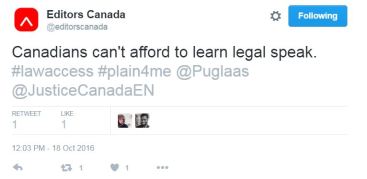
The new webinars are under way! Learn how some basics of language theory can help you with author relations (November 7), or get a primer in developmental editing of fiction & memoir (December 3 & 4).

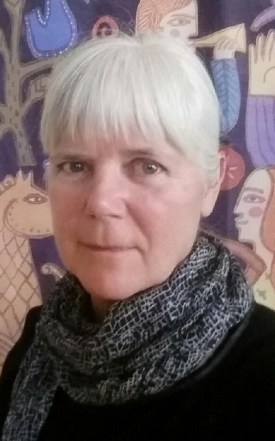
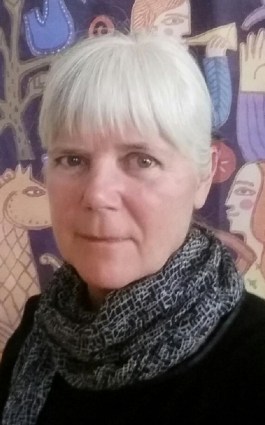
Guest Speaker: Susan Hannah, Book Designer

Collaboration was the prevailing theme at our October 12 meeting, when we listened to local book designer Susan Hannah speak on the topic “Let’s Work Together: I Won’t ‘Should’ You.” Throughout, she emphasized the importance of designers, editors, and others involved in a book listening to one another and being open to input.dlattach
About a dozen members and guests sat around tables full of books that bore Susan’s handiwork as she took us on a tour of a book designer’s world. Her presentation began with high-level topics such the basic functions of a book’s design, the qualities needed to be a good designer, and how design fits into the overall production process. But she went on to get into the nitty-gritty of typesetting decisions, printers’ quotes, fonts and leading, treatment of images, line width, cover design, and even file naming.

Here are just a few bits of wisdom she shared:

  • Book design is not just beautiful packaging, but an identifier for particular genres, an aid for readers with specific needs, and an instruction manual for readers.
  • Over 25 decisions must be made to get an accurate printing quote; it matters, because the cost of printing can make the difference between a book that makes a profit and one that doesn’t.
  • People with dyslexia read some fonts more easily; these include Aral, Comic Sans, Verdana, Tahoma, Century Gothic, and Trebuchet. (Susan now uses these in all of her books; “Why not?” she says, pointing out she can add a huge amount of variety with headings, chapter openers, and graphic elements.)
  • Consistent handling of images and captions is important not only for aesthetics, giving the book the feeling of a cohesive whole, but for ease of reading; a reader comes to expect a certain approach.
  • Cover design isn’t just about the front cover. Remember that when a book is on a shelf only its spine can be seen. The back cover’s job is to get people flipping pages once they have the book in their hands; when you see someone in a bookstore doing that, the chances are good that the book will be bought.

Throughout, she often came back to the importance of collaboration. Ideally, the many people involved in a book’s production ask each other questions rather than telling (”shoulding”) each other their own thoughts. “I always start the first design meeting,” Susan said, “by reminding everyone that we’re all here to celebrate this book, which was someone’s dream.”

An author herself, Susan professed to have greatly enjoyed meeting some of Kingston’s editors, and hopes to join us at some future twig gatherings.

Coming Up November 9: Meet a Trade Book Editor

Alex Schultz, Picton resident and friend of the twig, will give an informal talk sharing stories from his twenty years in Canadian trade publishing. See you there!
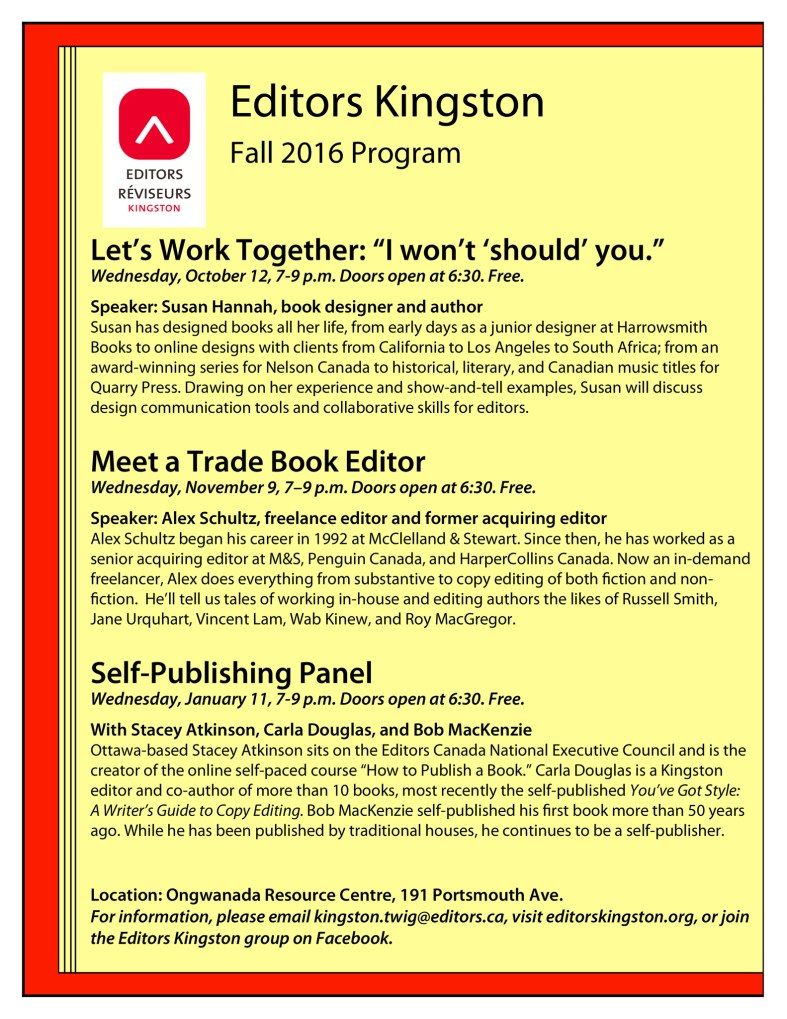
Coming Up October 12 ─ Susan Hannah, Book Designer and Author

Let’s Work TogetherI Won’t “Should” at You

What kind of collaboration might one expect between an editor and a designer? What kind of software do designers use? What is “tagging” a manuscript and how can it be done most effectively? What strengths can a designer bring to a project?

October’s speaker at the Kingston Twig can answer all these questions and many more about the world of publication design and how it connects with editing.

About the Speaker

dlattachSusan Hannah is a true book lover, and has been from an early age. Armed with qualifications in graphic design and creative art, she gathered her skills locally (including at Harrowsmith Magazine in the book division) and in Toronto, where she was a senior designer for an elite educational book design studio. The award-winning  book series Susan worked on as part of the design team with Nelson was used in public schools across Canada. She later worked for a typesetting firm that understood that traditional typesetting was becoming extinct and experimented with including a graphic designer as a service.

Back in Kingston, she has worked with Peter Dorn at the Graphic Design Unit out of Queen’s, typesetting his books and doing general graphic design. Then she moved to Quarry Press as the in-house production manager.

More recently, while continuing with freelance book design, Susan added a BA is psychology and a BScH in psychology/biology to her qualifications to reach her goal of writing and editing health books, such as those coming from the Canadian College of Naturopathic Medicine. In addition, she has written three self-help books with Robert Rose (publisher). And she continues with editing and other projects.

Susan has a tremendous amount of diverse experience in the world of publication design. We welcome her to our group to share some of those experiences and answer our questions.

Come Join Us!

Wednesday, October 12, 2016

7 to 9 p.m. (doors open at 6:30)

Ongwanada Resource Centre, 191 Portsmouth Avenue (map)

Free

Bring a friend!
Editors Kingston is a Twig of Editors Canada. Our events are open to anyone with an interest in editing.

Coming in November—Alex Schultz on Editing Trade Books

“What’s New?”—September Meeting Report

Association News

Lots of news after the long summer. First of all, the twig: Editors Kingston is alive and well, with 15 members (including one student affiliate), over 30 people on its email list for events & info, and over 60 on its Facebook page.

Now, some national updates:

Webinars Are Here!

Those at the Wednesday meeting had a sneak preview of the new Editors Canada line-up of webinars, which run the gamut from career advice to grammar to writing skills and beyond. The webinars have now been announced to the world, and registration is open!

Conference

Elizabeth d’Anjou reported on her experience at the 2016 Editors Canada conference, held in Vancouver in June. Some highlights:

  • defending the apostrophe in a fierce (and hilarious) debate against James Harbeck
  • the keynote address from Mary Norris (who brought the actual New Yorker comma shaker) and enjoying a beer with her at an after-hours party
  • participating in a panel on teaching writing and editing organized by twig-event-regular Christine Peets
  • the banquet, including presentation of the delightful Oops! Awards
  • a session by the creator of PerfectIt! editing software, with recommendations for  some apps and software for editors that are simple and inexpensive

The 2017 conference will be in Ottawa-Gatineau, June 9-10-11. Let’s fill it with Kingstonians!

Online Meeting October 1—Members, Please Vote!

An online meeting of Editors Canada members will be held on October 1, 2:00 p.m., with two votes scheduled:

  • approval of the revised Professional Editorial Standards
  • a motion put forward by a member at the Editors Canada AGM in June that national executive council members be allowed to serve no more than six years in a row.

Members, please vote! This second motion has important repercussions for the association.

To attend the meeting, you must register by September 23. To vote by proxy, you must send your proxy by September 28 to a member who will attend.

Elizabeth will be happy to vote your proxy. She’ll even send you the form. Email her: elizabeth@danjou.ca. (Elizabeth sits on the executive council; she recommends against this motion—the council needs flexibility to ensure a balance of skills and representation—but will be happy to cast your vote however you request.)

Roundtable Discussion: What’s New?

Six attendees enjoyed lively conversation that flowed easily from informal introductions to a discussion of the Editors Canada news above to the designated topic of the evening, which was to share something new in their respective editing worlds.

  • Nancy Wills has had a busy indexing year, in which she added creating embedded indexes for ebooks to her skill set—jumping into the deep end with an 1100-page tome about Freud for Cambridge University Press. “It was really an excellent book,” she said, “so I felt pressure to do right by it!”
  • Ellie Barton, who developed and teaches an online editing course for Queen’s, has been hired to teach stylistic editing and structural editing for Simon Fraser’s online editing certificate program. She will teach structural editing this fall.
  • Carla Douglas is writing pieces for Publishing Perspectives, an international online journal that covers publishing issues around the world. She’s also doing some of her own writing in addition to her editing work.
  • Elizabeth d’Anjou is aiming to increase her online presence. She’s up to a whopping 193 followers on Twitter (@ElizdAnjou), has a monthly “Ask Aunt Elizabeth” advice column for Editors Toronto, and continues to pretend she’s starting her own blog any day now, really.
  • Lee d’Anjou, an Editors Canada Honorary Life Member, is retired, so had no new aspect of her editing to report, but offered “Sometimes I manage to do something on the computer that actually works, thus astonishing Elizabeth.”
  • For Maggie Bailey, coming to the Twig meeting was new. A member of Editors Toronto many years ago, she had moved home towns and changed careers, and has been supply teaching in Camden East while doing occasional proofing or copy editing for Pearson. “I realized that when I’m editing, I feel like I’m doing what I should be doing,” she said, so she’s testing the waters, considering getting back into more editorial work.

Couldn’t make it to the meeting? Leave a comment and tell us what’s new with you!

This report written by Elizabeth d’Anjou, edited by Ellie Barton, and posted by Kathleen Fletcher. Teamwork rules!


Coming October 12: Working with a Designer

Coming Up September 14: What’s New?

2376598010_9543d6a12b_z

“Don’t you love New York in the fall? It makes me want to buy school supplies. I would send you a bouquet of newly-sharpened pencils if I knew your name and address.”

            –You’ve Got Mail

September brings a sense of new beginnings, even to those of us whose last “first day of school” was decades ago. The topic for the Editors Kingston meeting on Wednesday, September 14, is “What’s New?”

We invite you to join us and share

  • something new you learned in the past year (about editing or your editing business), or
  • a plan you have for the coming year to try something new.

As always, the conversation will be lively, and you’re sure to go home with some new ideas and some useful tips to try.

Elizabeth will also share some news from the national level (exciting tales from summer conferences! an online meeting coming up! new webinars!).

Drinks and munchies provided.


Come Join Us!

Wednesday, September 14

7 to 9 p.m. (doors open at 6:30)

Ongwanada Resource Centre, 191 Portsmouth Avenue (map)

Free

Bring a friend!
Editors Kingston is a Twig of Editors Canada. Our events are open to anyone with an interest in editing.

Pencil photo by Dvortygirl. Used under Creative Commons licence.


Coming Up in October: Working with a Designer


Coming Up April 13: Authors Talk Editing

Editors, of course, would not exist without writers. At Editors Kingston, we’ve decided it’s time to hear from the other side of the editorial conversation.

This month, we move our meeting venue to the Tett Centre Rehearsal Hall in order to host a panel of eminent Kingston-area authors — Shelley Tanaka, Melanie Dugan, and Ian Coutts — sharing their experiences with editing.The three writers represent a wide range of genres, subjects, and styles, so the discussion should be fascinating!

Shelley Tanaka has written more than twenty books for young people, including Nobody Knows (G

Shelley Tanaka

roundwood, 2012), Amelia Earhart: Legend of the Lost Aviator (Abrams2008), which won the Orbis Pictus award for outstanding nonfiction for children, and Mummies: The Newest, Coolest & Creepiest (Abrams, 2005). She has also edited dozens of children’s books (she has been fiction editor at Groundwood books for several decades). She teaches in the MFA program at Vermont College of Fine Arts.

Check out Shelley’s other books and the impressive list of awards they have won on her Writers Union of Canada profile page. Shelley is also a member of Kingston Wired Writers.

Melanie Dugan is the author of four novels, including one, Revising Romance (

Melanie Dugan (Photo by Chris Miner)

Sumach, 2004) that has an editor as its protagonist! The others are Bee Summers (Upstart, 2014), Dead Beautiful (Upstart, 2012) and Sometime Daughter (Second Story, 2002). Her writing has appeared in the Kingston Whig-Standard and Toronto Life. Her short story “A Map of the Human Heart” was shortlisted for the CBC Literary Award.

Don’t miss Melanie’s blog on Goodreads; it includes some fascinating discussion of her writing process.

Ian Coutts’s newest book describes his adventures brewing beer from scratch, including

Ian Coutts

Ian Coutts

growing the hops and barley, capturing the yeast and malting the grain himself. The Perfect Keg: Sowing, Scything, Malting and Brewing My Way to the Best-Ever Pint of Beer (Greystone, 2014) was the logical follow-up to Brew North (Greystone, 2010), an illustrated history of beer in Canada that was shortlisted for a World Gourmand Award. Ian has also authored and co-authored a number of other nonfiction books, including Titanic: The Last Great Images (Running, 2008, with Dr. Robert Ballard). He provides coaching services for other writers, and has led workshops for Editors Canada on creating book proposals.

Read more about Ian on the website of his company, Coutts & King.

Come Join Us!

Wednesday, April 13

7 to 9 p.m. (doors open at 6:30)

Tett Centre, Rehearsal Hall, 370 King Street West, Kingston (map) (fully accessible)

Free for Editors Canada members

$10 for non-members

Cash bar

Bring a friend!

Coming in May: Stylistic Editing Workshop

March Meeting Report: Online Resources

Depositphotos_42984765_m-20151

Favourite online resources mentioned at the meeting included Editing Canadian English, a quick citation guide from the Chicago Manual of Style Online, and a tool for capitalizing titles.

Association News

The session line-up for the Editors Canada Conference in Vancouver, June 10 to 12, has been announced. Be sure to check it out!

Note that the Editors Canada AGM will be held Saturday, June 11; the National Executive Council is investigating options for electronic participation, so members can ask questions and vote from anywhere.

Missed the Twitter Chat on House Styles? Check out the Storify recap.

Round Table Topic: Online Resources for Editors (and Writers)

Whether it’s a thesaurus app or a webinar to expand our editing business, editors in Canada use online resources every day. Members of Editors Kingston met on Wednesday, March 9,  to discuss favourite digital resources – those they rely on to complete projects quickly and reliably and to stay at the forefront of the editing industry.

Some Top Picks

Learning even one new online resource can save you time down the road. For instance, if you’re editing a headline or title, check out the TitleCap tool to properly and automatically capitalize titles in your content, depending on the style guide you’re following.

Writing or editing for academic journals, books, or other publications that include bibliographies or reference lists? Check out the Chicago Style Quick Citation Guide for clear examples of how to cite sources using both the notes and bibliography and author-date documentation systems. Looking up how to cite anything from a website to an email is right at your fingertips. While many editors use the print version of Chicago, those who prefer to work electronically (or those who work with two computer monitors) subscribe to the online edition. An individual subscription costs $35/year, and a free 30-day trial is available. The quick guide is a free tool available from the Chicago Manual of Style Online (on Twitter @ChicagoManual) and is a must-have for anyone writing or editing in the digital age.

The site also devotes several pages to Chicago Style Q&A (also free, new questions and answers every month). It has a very good search function, and the answers incorporate a sense of humour.

Editing Canadian English from Editors Canada is another must-have online resource for editors in this country. An online subscription is available for a free 30-day trial; after this, the cost is $35/year (or $25/year for Editors Canada members).

Are you an editor and avid user of Facebook or social media? If so, you might enjoy the discussions that take place on the Facebook group Editors’ Association of Earth. Subscribe to the EAE Backroom group, meet editors around the world, and talk about the issues and challenges that we all share. If you prefer to read email, Editors Canada offers an email forum for discussing all things editorial. You’ll find it in the Members area of the association’s website.

Other Favourites

Interested in more online tips and resources for your editing work? Here are some other favourites shared by those at the meeting:

Merriam-Webster: A trusted American dictionary and thesaurus; also available as an app.

Tandem Editing: A downloadable list of grammar and style resources compiled at a get-together of U.S. editors and generously shared by Kyra Freestar.

Copyediting: A website and brand that shares tips, job links, webinars, a weekly e-newsletter and other useful resources. Incorporates content from the now-defunct The Editorial Eye. Can be especially helpful for those just starting out in editing.

Jane Friedman: Information on how to publish, resources and books for writers, a blog, online classes, and more.

Peter Sokolowski: Follow this Merriam-Webster lexicographer on Twitter for commentary on words and language and news about what lookups are “spiking.”

Sentence first: “An Irishman’s blog about the English language,” written by Stan Carey.

Freelance Writing Jobs: Writing tips, resources, and jobs – all geared to freelance writing.

The Purdue Online Writing Lab: Writing and teaching resources, style guides, and more.

Instant Estimate from Kingston freelance editor Adrienne Montgomerie. Enter the word count of your project, and this handy tool will estimate the time required for one round of each type of editing (substantive and developmental editing, copy editing, proofreading) and a cost estimate (in Can$).

Grade-level Science Vocabulary List for Science Writers and Editors: How to write science at a level that kids can understand.

OKAPI! This Internet application for creating curriculum-based reading probes lets you determine whether your content is directed at the appropriate audience and age group. It’s also helpful for text written for a general audience.

Master List of Logical Fallacies: Determine whether a writer’s argument is faulty, fake, or deceptive.

Wolfram Alpha: Calculate, or learn about, just about anything in 32 widely different categories.

Google Fight: Type two keywords and find out which one gets more visibility on Google.

Ngram Viewer: Graphs the frequency of a word, term, or phrase in a corpus of books over selected years.

Beyond the Book: Listen to podcasts on the business of writing and editing, including the changing world of publishing.

The Kindle Chronicles: The Friday podcast all about Kindles and ebooks. Hear about changes in technology and where the publishing industry is headed.

Explorations of Style: A well-organized blog with in-depth discussion about academic writing.

LEGISinfo: Provides information on current legislation before Parliament as well as legislation from other parliamentary sessions.

Coming in April: Authors Talk Editing

Spread the word! On April 13, we will host a panel of Kingston-area authors — Shelley Tanaka, Melanie Dugan, and Ian Coutts — talking about their experiences working with editors.

Note: For this event, we’ll move from our regular meeting space to the Tett Centre, so we can accommodate a bigger group. There will be a $10 charge (waived for Editors Canada members) to help offset the event costs.

Thanks to Karen Richardson for the Round Table write-up.

Thanks to Stephanie Stone for providing copyediting and for collecting links ahead of the meeting.

Photo by Wavebreakmedia.

Coming Up March 9: Online Resources

File:MSI Laptop computer.jpg

What are your favourite online editing resources? Let’s share and discuss!

Is there an editing-related website you find you use all the time in your work? A language blog that always teaches you something new? An app you wouldn’t be without? A piece of software (or hardware) that’s made your editing life a lot easier? Please share your recommendations!

Also feel free to bring questions for your colleagues: maybe you are wondering where you can get good help with Word 2013, or what reliable dictionaries are available online, or how people communicate with authors and collaborators who live at a distance….

Elizabeth’s ever-helpful husband, Russell, will bring a screen and laptop so we can check out websites together.

If you can, please send a quick note before the meeting to Stephanie Stone at sstone4@cogeco.ca with links to your fave resources; she’ll gather them and bring them on a USB stick.

Come Join Us!

Wednesday, March 9

7 to 9 p.m. (doors open at 6:30)

Ongwanada Resource Centre, 191 Portsmouth Avenue (map)

Free

Bring a friend!

Coming in April: Authors Talk Editing

On April 13, our guests will be a panel of Kingston-area authors — Shelley Tanaka, Melanie Dugan, and Ian Coutts — talking about their experiences working with editors. It’s going to be fascinating. Spread the word!

Note: For this event, we’ll move from our regular meeting space to the Tett Centre, so we can accommodate a bigger group to hear our fabulous panel of authors. There will be a $10 charge (waived for Editors Canada members) to help offset the event costs.


Laptop Image: Kristoferb at English Wikipedia; used under Creative Commons Licence

February Meeting Report: Academic Acquisitions Editing

2016-02-10 20.44.42

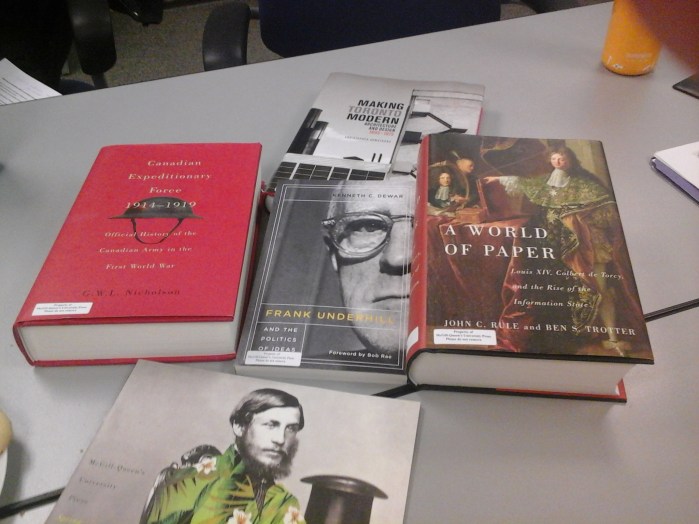
Guest speaker James McNevin, acquisitions editor for McGill-Queens University Press, brought some of the press’s current titles for show and tell.


Association News

Nearby Editors Canada seminars coming up include “Copyediting II” on March 22 in Ottawa and both “Manuscript Evaluation” and “Creating a House Style” (the latter presented by our own Elizabeth d’Anjou), also on March 22, in Toronto.

The conference is coming! The national Editors Canada conference this year will be held June 10, 11, and 12 at the Coast Plaza Hotel & Suites in Vancouver, B.C. The theme is “A Correction Connection.” Keynote speakers will be

  • Mary Norris — copyeditor for The New Yorker, presenter of delightful YouTube grammar videos, and author of the bestseller Between  You and Me (Ellie shared around her copy)
  • Bill Walsh — copyeditor at The Washington Post, blogger at The Slot, and host of a popular monthly online “Grammar Geekery” chat

Speaker: James McNevin

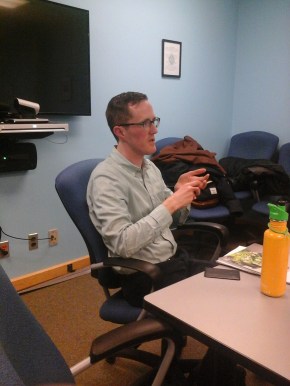
James McNevin, acquisitions editor for McGill-Queens University Press, spoke to a full room of interested Editors Kingston members and visitors at the February 10 meeting.

The topic drew several new faces, including graduate students and professors from Queen’s University and the Royal Military College of Canada.

Acquisitions Editing — A Day in the Life

2016-02-10 20.11.15

James McNevin

At our request, James focused his remarks on exploring the question “What does an acquisitions editor at a university press do?” The answer turns out to include the following:


  • scouts for new authors — These are found by attending conferences, keeping abreast of journal articles in his disciplines, scanning bibliographies, checking university departmental websites, and looking to see what other university presses are up to.
  • brings in new manuscripts — The target at McGill-Queens is an optimistic 20 to 25 manuscripts a year.
  • evaluates proposals — Academics have to write book proposals, just like authors of trade nonfiction. (Attendee Angela Pietrobon pointed out that this fact provides an opportunity for freelancers: she helps authors write proposals for the University of Toronto Press.)
  • finds peer reviewers — Peer review is what distinguishes university presses from all other types of publishing. James stressed the importance of finding good reviewers: fair, qualified, and open to the author’s point of view (with no axe to grind) but willing and able to respond to it critically.
  • solicits a response to the peer review — An ideal author’s response is thoughtful and not defensive, and shows a willingness to revise. (Angela commented that she also helps authors with this stage.)
  • finds funding for each title — Acquisitions editors at a university press spend a lot of time on this task, James explained. Since the market for academic books is so small, the press can’t count very much on sales revenues. The money to publish a title can come from a wide range of sources: government grants, special funds focused on particular subjects, sometimes even the author’s own university department.
  • gets manuscripts ready for transmittal to editorial  — The managing editor then oversees the copyedit and proofreading (at McGill-Queen’s, the same freelancer usually performs both of these tasks for a given title).
  • draws up the contract— The stakes here are not particularly high in academic publishing, James said, but as some university presses are moving into nonfiction trade books with the potential for much larger audiences, there are exceptions.

    2016-02-10 20.10.37

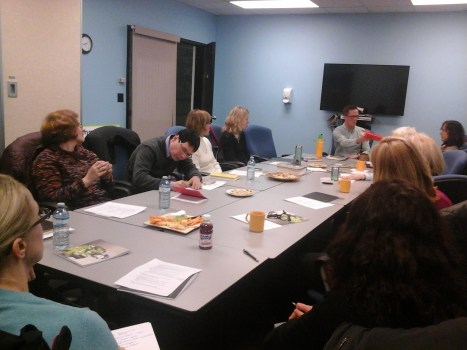
    Books, snacks, drinks: A group of happy editors!

  • checks images and permissions— The author is responsible for providing usable versions of any images to be included and for seeking any necessary permission to reproduce copyrighted material, but may need help understanding what is required and carrying it out.
  •  liaises with the marketing department — The acquisitions editor is in the best position to provide marketing with info about the book and why it’s important.

The presentation was followed by lots of questions and discussion over cookies and coffee. And, of course, by much admiration of the books James had brought for show and tell!

Write-up by Ellie Barton with Elizabeth d’Anjou. Photos by Elizabeth d’Anjou.


Coming Up February 10: Acquisitions Editing

McGill-Queens UPAre you curious about what goes on behind the scenes at a university press?

On Wednesday, February 10, acquisitions editor James MacNevin of McGill-Queen’s University Press will take us through the acquisitions and editorial process. With examples and anecdotes from his own experience, he will explain

  • how a press builds a list in a given subject area, including finding suitable manuscripts and recruiting authors
  • how manuscripts are evaluated and developed, including the various roles of acquisitions editor, managing editor, and freelance editors
  • where the marketing department comes in
  • what it takes to be an effective acquisitions editor.

Those of us who work on academic press books as freelancers enter the picture long after the major decisions have been made. With this talk, our guest speaker will provide a view from the other side of the desk. We’ll come away with a better understanding of where copy editors (and stylistic editors) fit in the process, what has gone on before, and what happens to the manuscript after our work is done.

There will be ample time for questions and discussion.

About the Speaker

James MacNevin specializes in history, geography, sociology, and cultural studies. Prior to joining McGill-Queen’s University Press in 2013, he held a similar position with a textbook publisher, and prior to that he worked in trade publishing. In addition to his career in book publishing, he is a freelance writer and historian.

Come Join Us!

Wednesday, February 10

7 to 9 p.m. (doors open at 6:30)

Ongwanada Resource Centre, 191 Portsmouth Avenue (map)

Free

Bring a friend!